

Nightcap Film Room: Is the Fullback Making a Return in Arthur Smith’s Offense?
Arthur Smith continues to use the TE/H-back as a movable backfield piece to create leverage in the run game

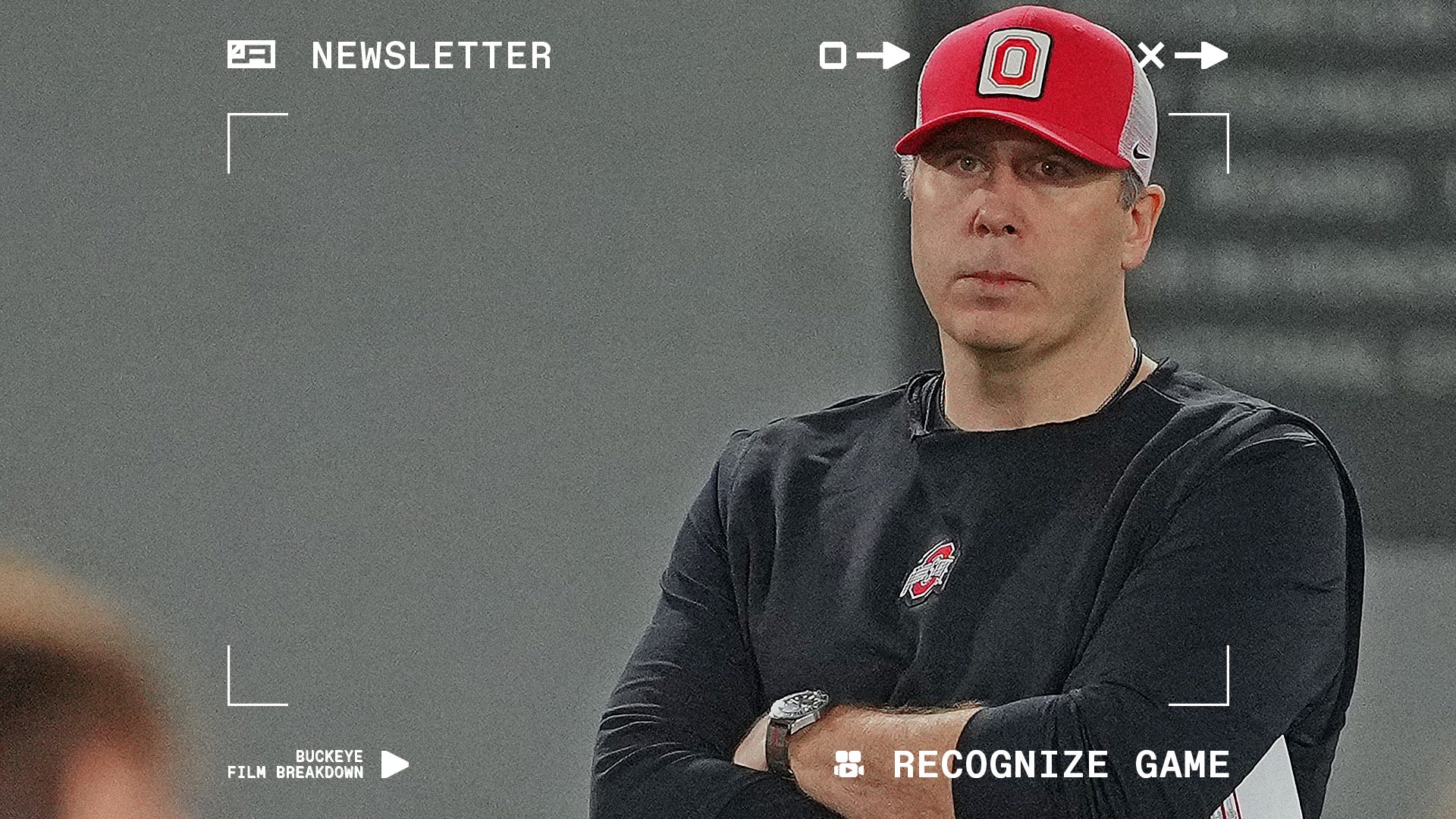
The fullback may be fading from many offenses across football, but its value has never truly disappeared in Columbus. Ohio State has long used the position in creative ways, and former Buckeyes like Matt Keller helped showcase how impactful a true lead blocker could be in the run game. Now, as we take a nightcap look at Arthur Smith’s offensive structure, there are signs that the modern version of that role — often deployed as a TE/H-back hybrid — could once again become an important piece in shaping the run game.
Let’s jump into the film.
CLIP #1
In this clip from the Pittsburgh Steelers 2025 offense, you get a good look at how Arthur Smith creatively uses the TE/H-back as part of the run structure.
At the snap, the offensive line takes hard wide-zone steps to the left, immediately forcing the defense to flow laterally. The success of the play hinges on the running back’s read of the left tackle.
If the tackle can reach the defensive end and pin him inside, the running back stays on the wide track and follows the TE/H-back to the edge.
But if the tackle cannot reach the end and instead has to block him out—which is what happens in this clip—the picture changes. The TE/H-back immediately transitions from lead blocker to cutback escort, working back inside to identify the backside scraping linebacker.
That’s where the design becomes effective.
The wide-zone action forces the second level to flow hard toward the stretch, and that lateral movement creates natural cutback lanes. When the defense overflows, the offense gains better blocking angles and the back can hit the crease behind the flow.
This is where Arthur Smith’s creativity in the run game shows up. The same initial look can produce multiple outcomes depending on the edge block, giving the running back options while still maintaining structural integrity in the blocking scheme.
To execute this consistently, you need two things:
A running back with great vision and patience
A TE/H-back or fullback athletic enough to adjust in space and redirect to the second level
When those pieces are in place, the defense can be right initially and still lose the play once the cutback opens.
LATEST PODCASTS:
LATEST ARTICLES:
LATEST FILM ROOM:
FILM ROOM: What Christian Alliegro Brings to the Buckeyes 2026 Defense
FILM ROOM: Scouting New Ohio State TE Hunter Welcing and How He Fits the 2026 Offense

CLIP #2
In the second clip, we see more of the same backfield presentation, but this time the offense transitions into counter action.
The TE/H-back initially takes hard steps toward the field, selling the same wide-zone look we saw earlier. Then he plants his foot and redirects back across the formation, essentially becoming the pulling tackle in a Counter GT concept.
That small detail is important. The initial flow forces the defense to step laterally, and once the H-back redirects, the offense creates leverage at the point of attack with an extra lead blocker.
This is a concept Ohio State has deployed in the past, which means the transition to this type of run design would be fairly natural.
It also reinforces something that stands out in Arthur Smith’s run game philosophy — the value of an athletic TE/H-back who can align in the backfield and function as a movable lead blocker. Whether it’s wide zone, split flow, or counter action, that player becomes a key piece in creating angles and manipulating second-level defenders.
And the usage reflects that priority.
Of the 93 offensive snaps played by Connor Heyward in the 2025 season, 33 came from the backfield in two-back sets, highlighting how frequently Smith deploys that versatile TE/H-back role as part of his run game structure.
Final Sip: Could the Fullback Return in Columbus?
The traditional fullback may not show up on the depth chart the way it once did, but the role itself is far from extinct — it’s simply evolved. Concepts like these show how offenses can still maximize a versatile TE/H-back as a movable piece in the run game, creating angles, manipulating second-level defenders, and opening cutback lanes. If that style were to surface again in Columbus, Ohio State already has intriguing options on the roster. Players like Max LeBlanc, Bennett Christian, and Mason Williams bring the size and athletic ability to potentially fill that versatile backfield role.
Buckeye Film Breakdown will return soon with some fresh content.
