


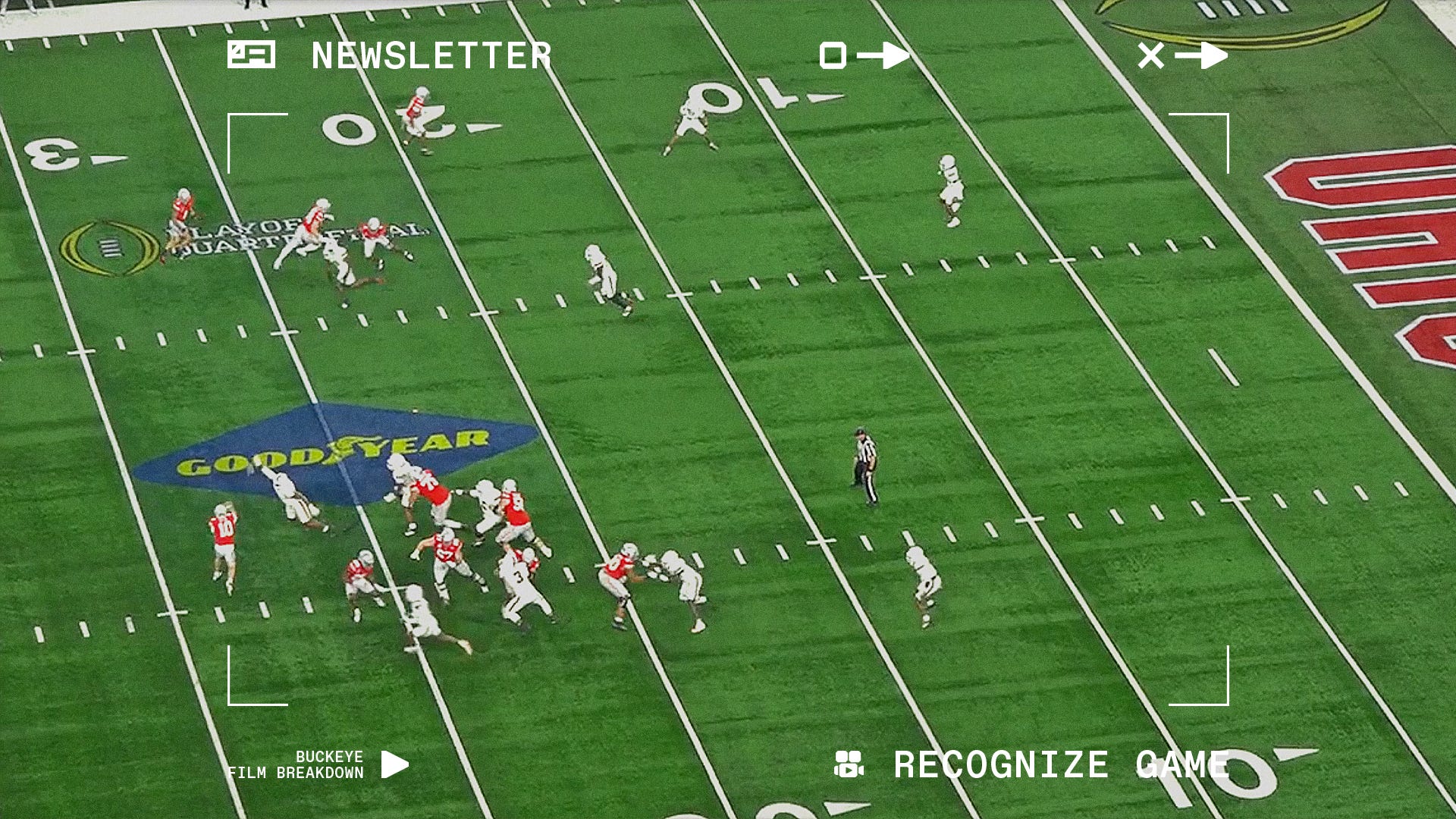
It was the pivotal moment in the game Wednesday night. Following a slow first quarter in which both teams failed to score, Miami struck early in the second quarter with a 13-play touchdown drive, and Ohio State needed an answer. The last thing the Buckeyes could afford on this night was falling behind by multiple scores early, especially given how the offense had played to that point. When you factor in their pace on offense, it was always going to be a risky situation.
The drive began promisingly with a play-action show throw downfield to Jeremiah Smith that resulted in a 59-yard gain. On the very next play, at the Miami 16-yard line, a play-action dropback resulted in a sack, but there was a seam throw to the tight end that Julian Sayin missed — a miss not helped by late pressure from Reuben Bain. That miss proved critical, as it would have been a walk-in touchdown, and we know what happened on the next play.
LATEST PODCASTS:
LATEST FILM ROOMS:
LATEST ARTICLES:
Opening Drive 1/1: Buckeyes See Season End Against Hurricanes
Opening Drive 12/31: Revisiting ‘David Versus Goliath’ Ahead of Cotton Bowl
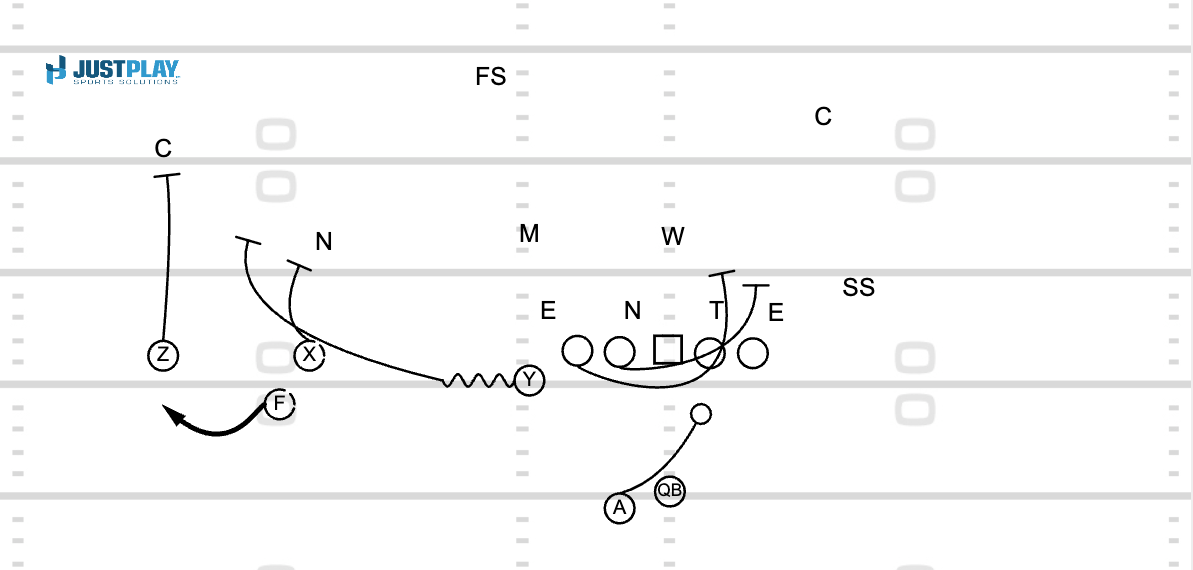
After watching this one several times, I do think it was a pre-snap read RPO. In these run-pass options there can be pre-snap decisions made and post-snap decisions made on whether to run the ball or pass the ball. This one feels more like a concept of the pre-snap read variety. Here is how the design looks in playbook form as it’s simple G/T Counter (pulling the guard and tackle) paired with a perimeter bubble screen.
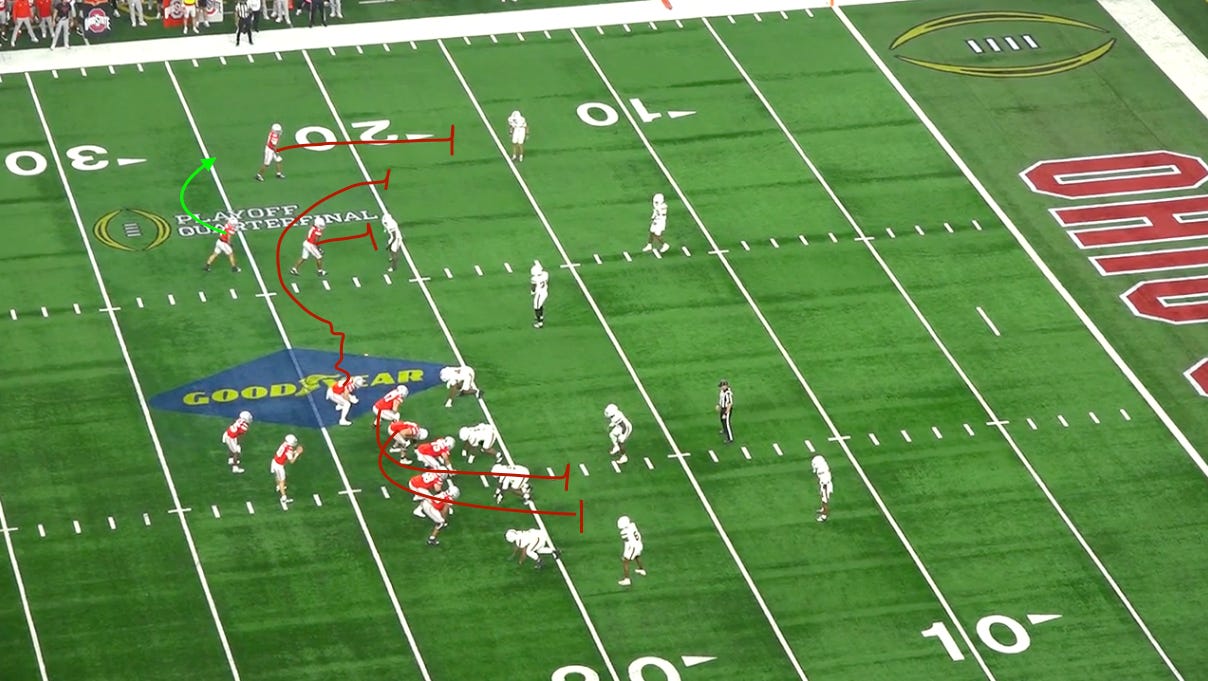
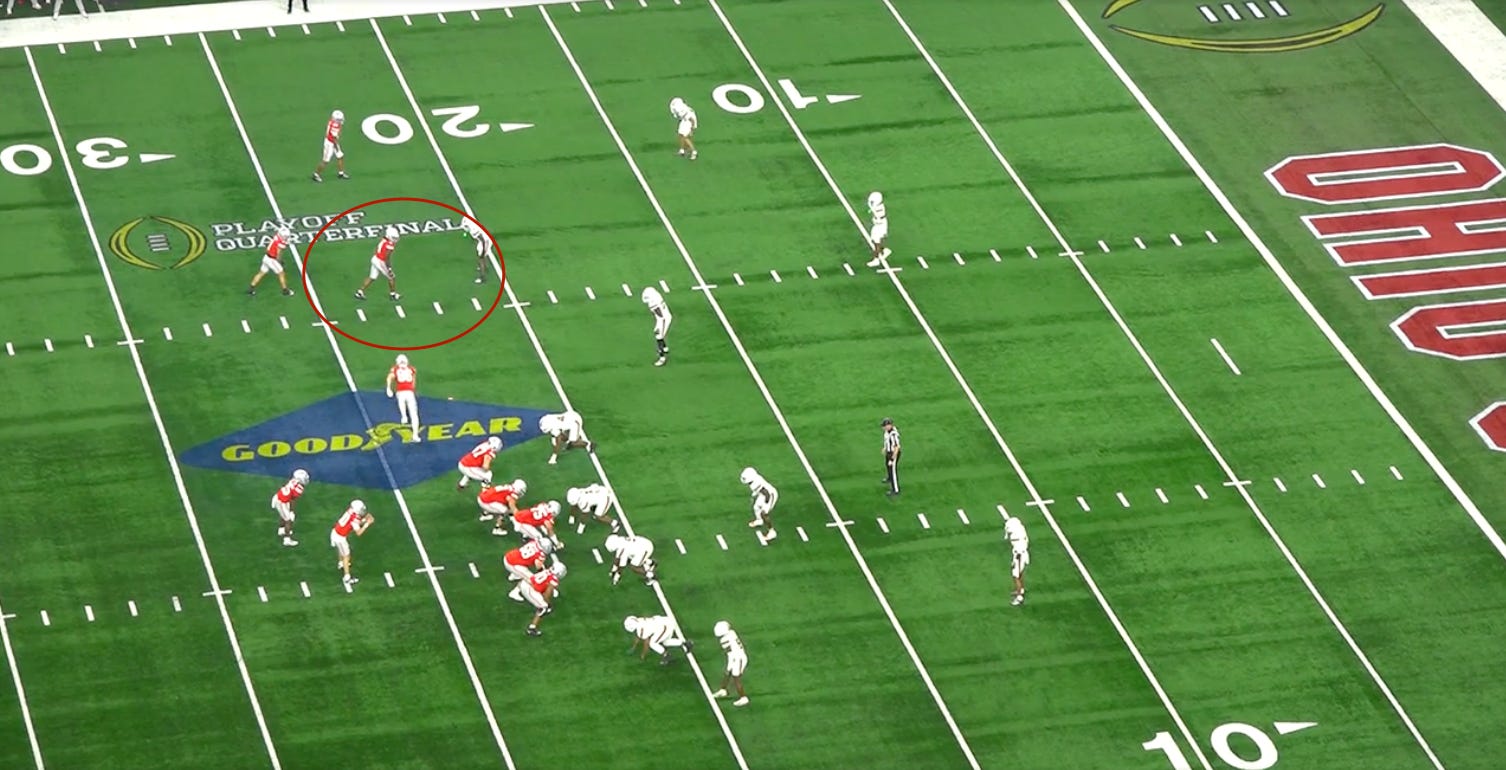
At times concepts on the perimeter, such as the bubble screen we see here, will be decided by how many bodies there are to block on the perimeter. If you can get three blockers on two defenders in space, you love to throw screens. That is the pre-snap look you get here.
A concept can also be designed to key in on the numbers on the perimeter to see if there is an advantage or there can be a “box indicator” to tell the offense, particularly the quarterback, that this is a look we can run against. Of course not being in the coaches office I cannot say with certainty if Sayin is reading the look Miami gave on the perimeter or if he keys in on the box look, but the throw read was evident for him right away. He didn’t hesitate.
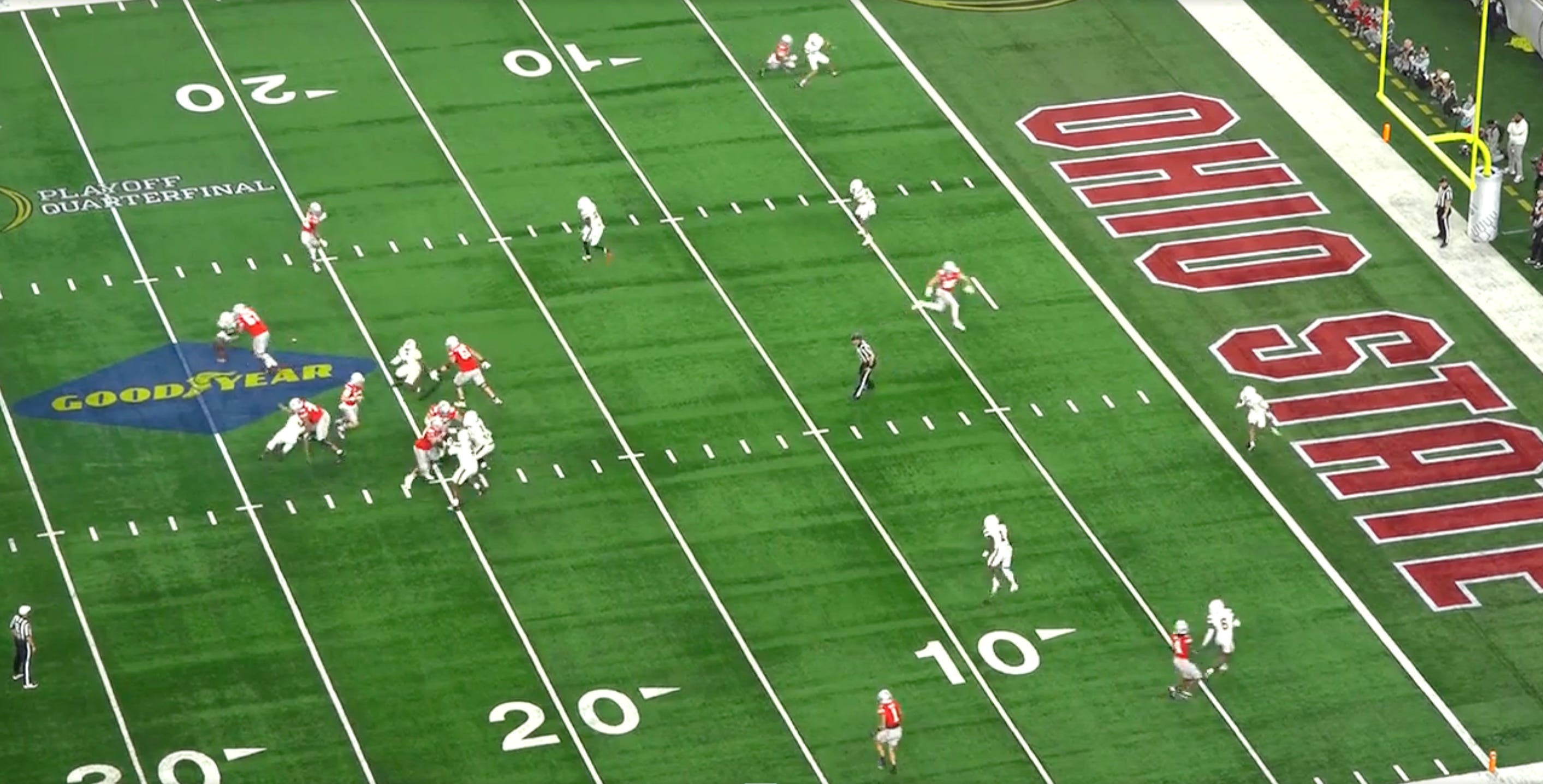
Here are the next few issues. Due to formation, with Smith and Carnell Tate both on the ball on the same side, Smith is an ineligible receiver. This means the best wide receiver threat for the offense is a dead target and Miami’s Keionte Scott (No. 0) knows this. That formation, along with the lateral tight end motion, are dead giveaways for a screen design coming his direction. He was waiting eagerly to jump this concept without fear of dropping into coverage.
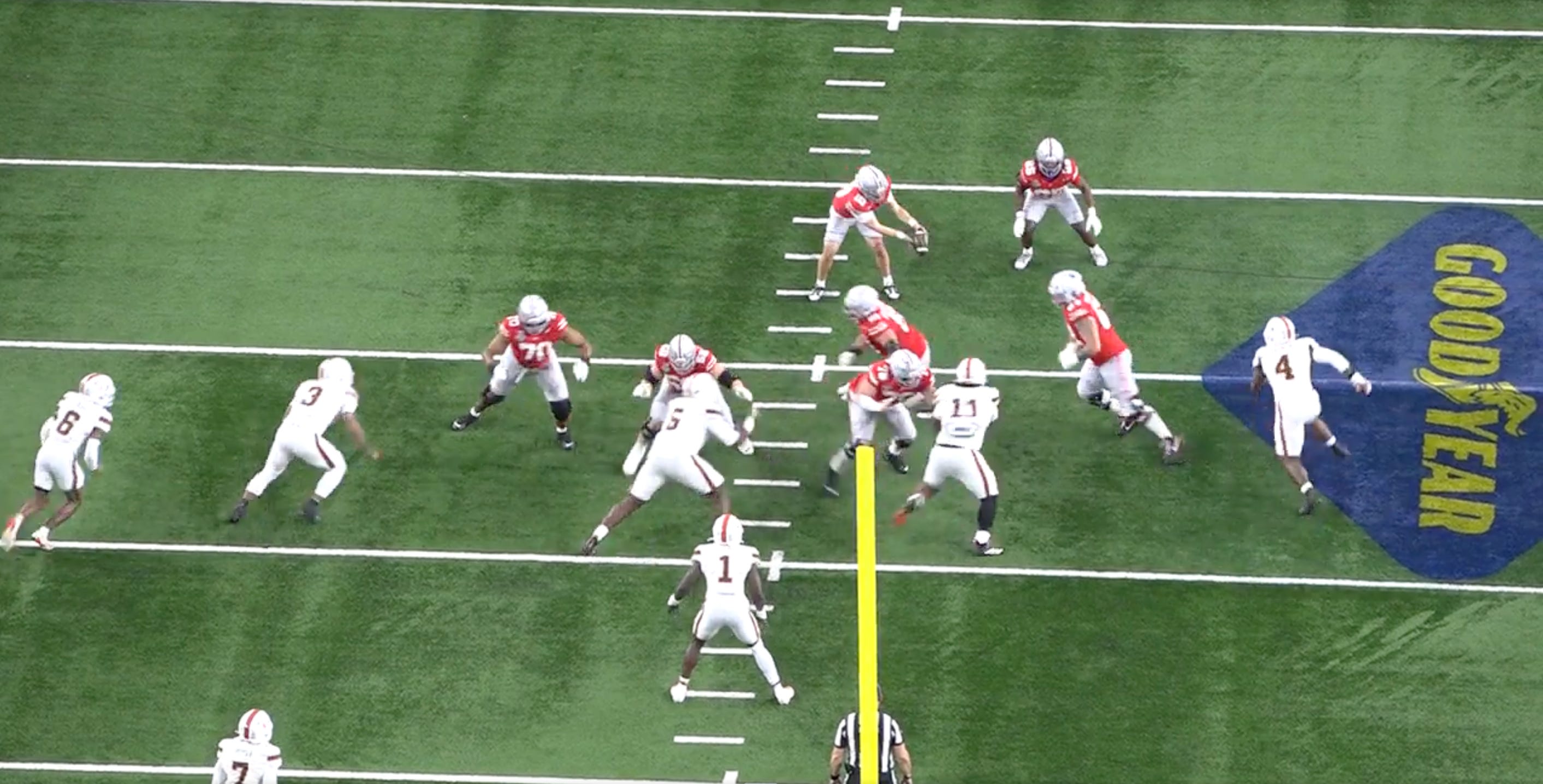
The next issue: the snap was inaccurate. Whenever you run RPO, the split-second decision at the mesh point (when the quarterback and running back meet) is key. The snap must be accurate to ensure the quarterback has his eyes in the right place and that did not happen here as it misses low and left. This makes the throw a little late from Sayin and means Bain (No. 4) can get upfield quicker to disrupt the throw’s pathway as well.
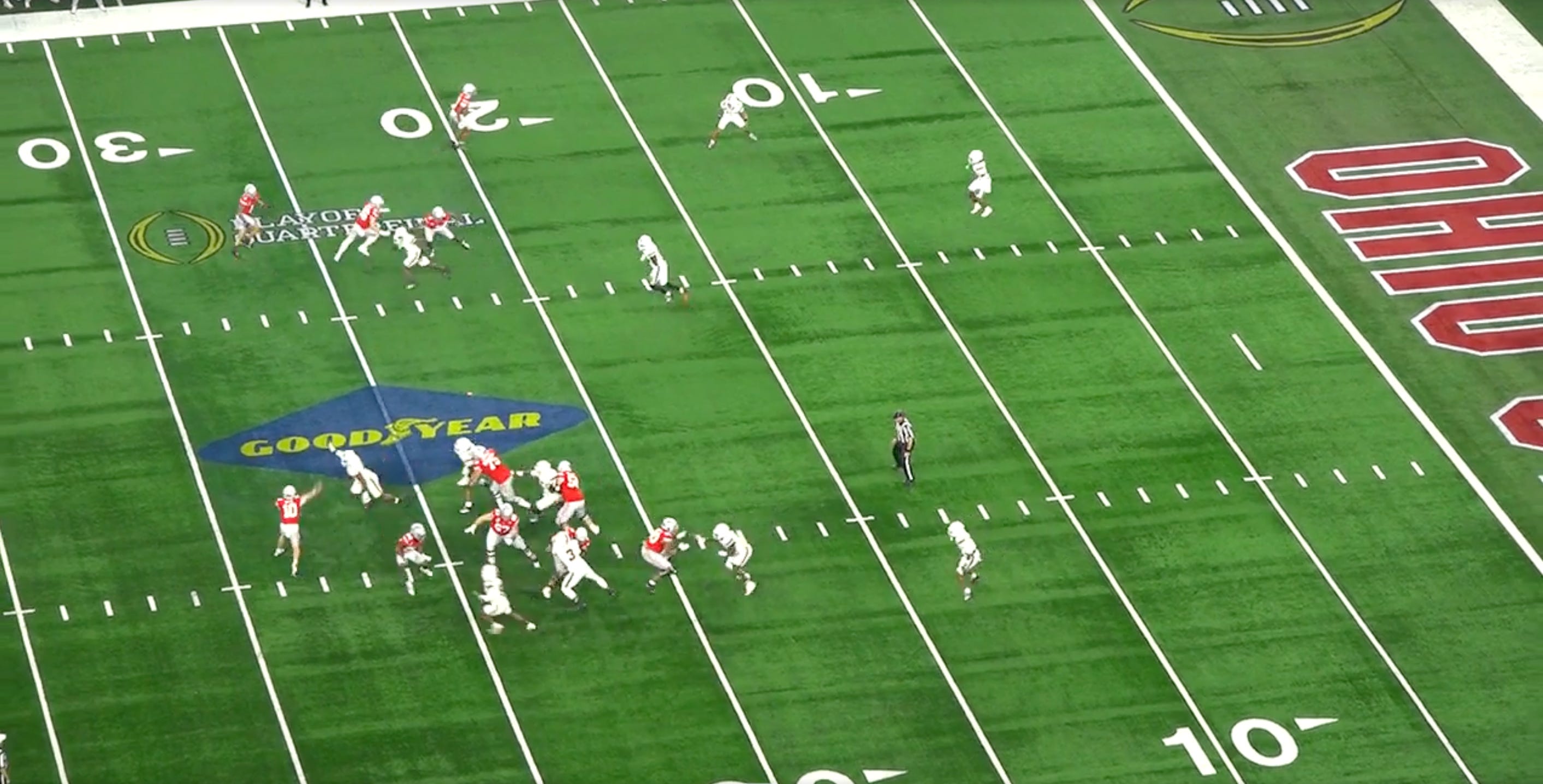
So, once we have a low snap, late throw, giveaway formation, it all comes down to can your perimeter execution overcome it. And, as we know, that did not happen. Smith releases wide to go where he thinks Scott will run to defend the screen and Scott simply ducks underneath the block to jump the throw lane. Scott is there so easily he never has to break stride.
It is a pure timing concept once the perimeter throw decision is made so Sayin can’t really read the throw and decide not to throw it. Perhaps he could have sniffed it out somewhat if the snap wasn’t so inaccurate and if the snap count wasn’t so predictable (more on this another day) and Bain wasn’t upfield so fast but that’s how it goes. You need an accurate snap, less predictable alignments, and execution in blocking on the perimeter.
As we know, this was one of the key differences in the game’s outcome. It will haunt the Buckeyes for the entire offseason.
Buckeye Film Breakdown will return soon with some fresh content.

While 4 misses the block, that Miami defense gets all the credit for reacting the way he did. 4 definitely wasn’t prepared for how the defender attacked that screen.