


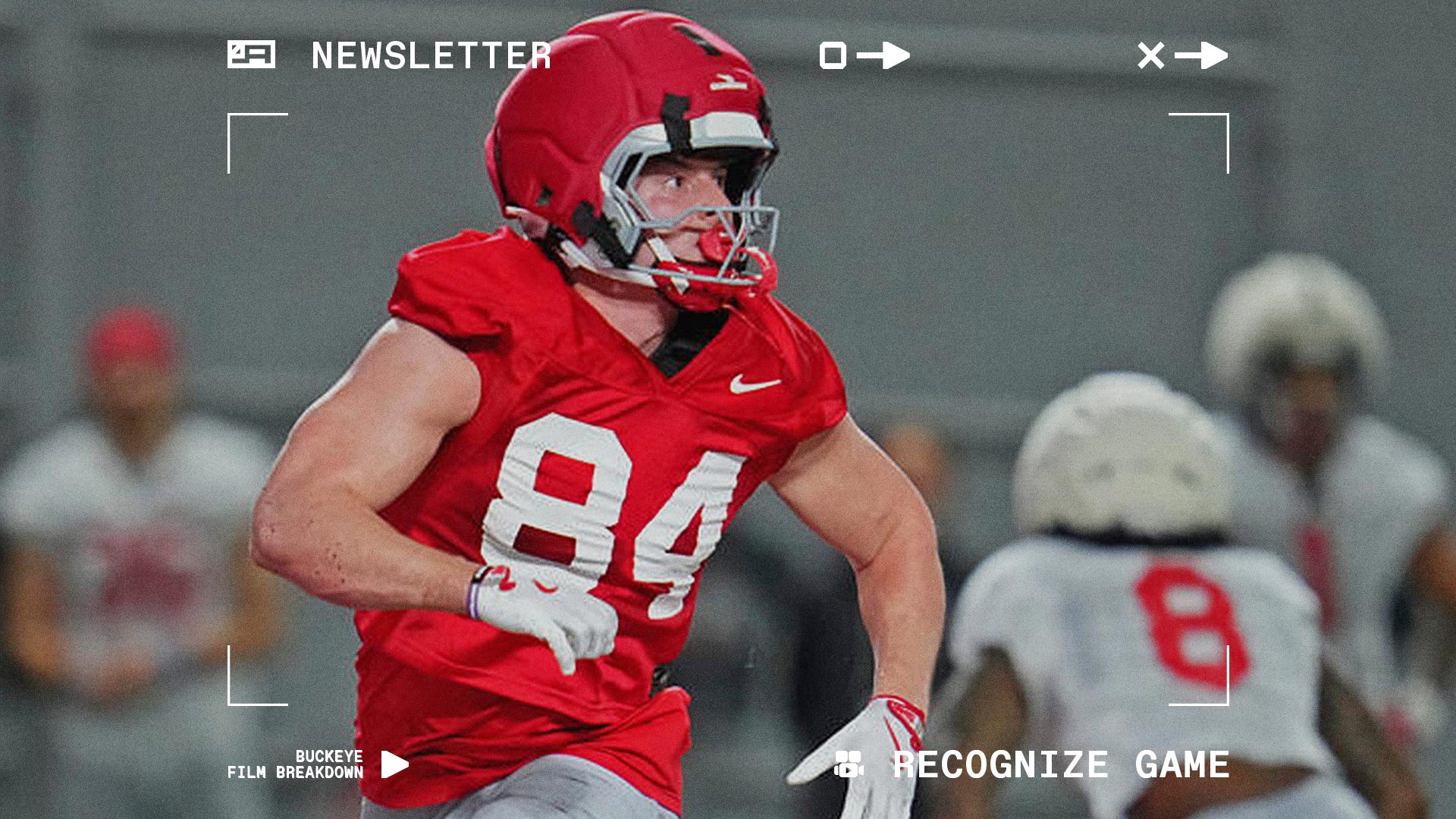
There’s a tendency to evaluate tight ends by box score production—targets, catches, yards. In Arthur Smith’s system, that lens misses the point.
This offense is built on structure, disguise, and forcing defenses into bad answers. And at the center of that structure is the tight end room.
Not as a featured stat leader.
But as the piece that makes everything else go.
What the Numbers Actually Say
Before Pittsburgh, Arthur Smith’s offenses with the Tennessee Titans and Atlanta Falcons consistently leaned on tight ends in high-leverage situations—not high volume.
2019–2020 Titans
Jonnu Smith totaled 800+ yards and 11 touchdowns across two seasons, becoming a primary red zone weapon.2021 Falcons
Kyle Pitts eclipsed 1,000 yards as a rookie, showing the vertical and matchup potential within the system.
The takeaway is consistent.
Tight ends are not force-fed targets—but they consistently produce in moments that matter most.
Production is intentional, not inflated.
How the Offense Uses the Position
Everything in this system is built on personnel stress.
Tight ends allow the offense to:
Stay in 12 and 13 personnel without tipping intent
1 Back, 2 Tight Ends or 1 Back, 3 Tight Ends etc.
Generate explosives off play-action
Manipulate second-level defenders
Shift from heavy to spread without substituting
Core concepts show up over and over:
Crossers and overs off run action
Leak concepts
Seam throws against split safety
Red zone isolation
This is not an accessory position.
Tight ends are built into the progression and the structure of the offense.
LATEST PODCASTS:
LATEST ARTICLES:
LATEST FILM ROOM:
FILM ROOM: Ian Moore vs. Purdue & Miami — What the Tape Shows
FILM ROOM: What James Smith Brings to the Buckeyes’ Defensive Front

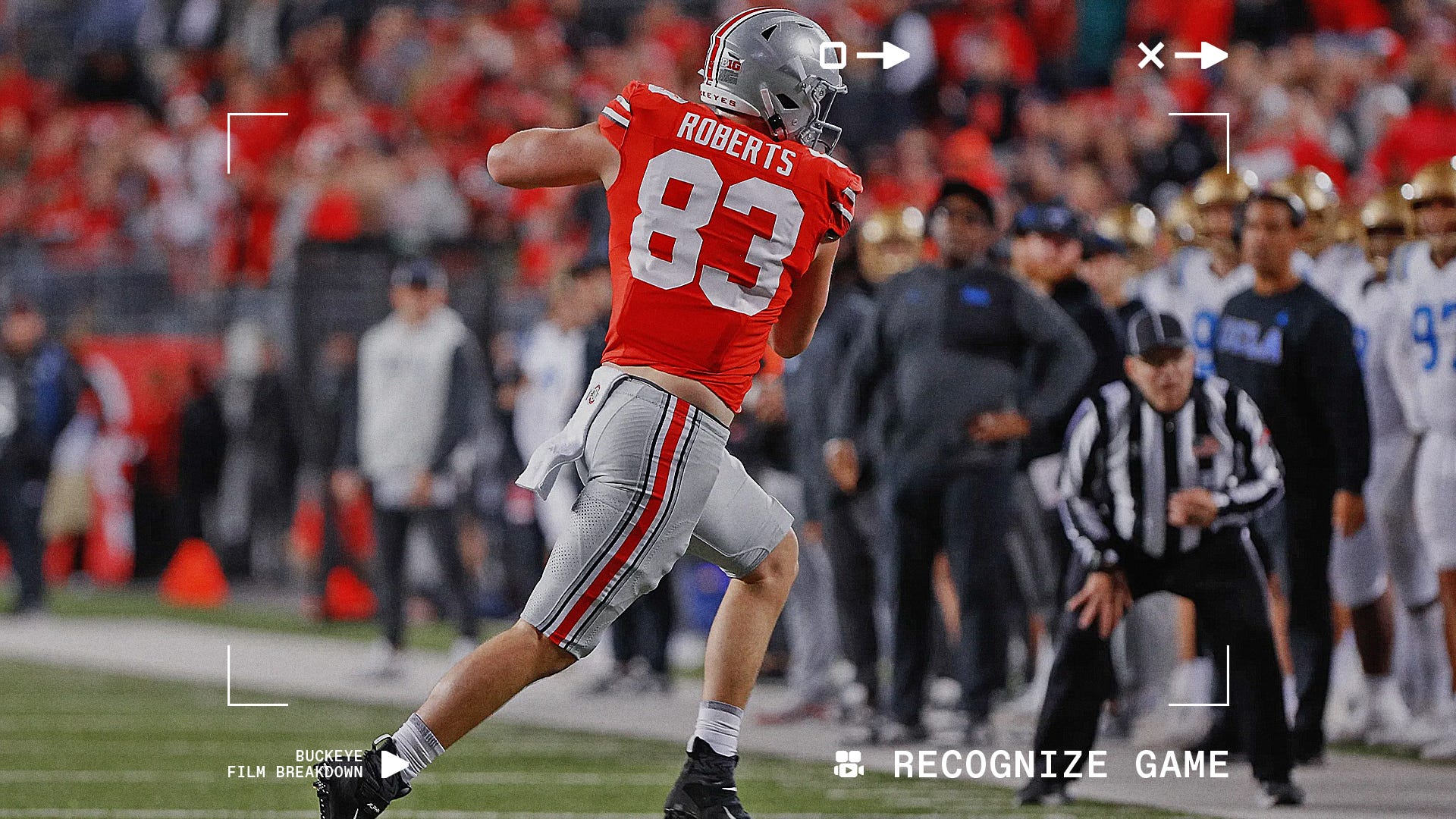
Ohio State TE Room — Defined Roles, Real Impact (In My Opinion)
This is where the Buckeyes are built to match the system.
Nate Roberts — The Featured Mismatch
The top receiving threat in the room. Roberts has the ability to stretch seams and win against linebackers and safeties in space.
This is the player defenses have to account for.
Hunter Welcing — Additional Receiving Layer
A second movement piece who can be flexed, motioned, and schemed touches.
Prevents defenses from keying on one player and expands the passing menu.
Mason Williams — Inline Stability
Coming off a 26-catch, 276-yard, 3-touchdown season, Williams brings reliability and physical presence.
Handles the dirty work while remaining a functional option in the pass game.
Bennett Christian — Physical Foundation
Size, strength, and blocking ability set the tone.
Allows the offense to stay multiple without sacrificing identity.
Different skill sets. Same objective.
Create conflict.
How the Tight End Unlocks the Offense
The tight end’s value isn’t just production—it’s what it forces the defense to do.
When multiple tight ends are on the field, the defense has to choose:
Stay in base personnel and defend the run (and play with less DBs against the best player in the country in JJ Smith)
Or substitute for speed and defend the pass
Either way, the offense has the answer.
If the defense stays in base: Players like Roberts and Welcing are matched on linebackers in space
If the defense substitutes: The run game attacks lighter boxes behind Williams and Christian
That’s where the advantage lives.
Multiple tight ends allow the offense to:
Dictate matchups
Eliminate defensive substitution
Create “same look, different play” scenarios
Force hesitation at the second level
And hesitation is where explosives come from.
Why This Shows Up Across Football
This approach isn’t unique—it’s proven. Especially in the NFL.
The San Francisco 49ers, led by George Kittle, consistently use multiple tight end sets to create run-pass conflict.
The Philadelphia Eagles leaned into heavy personnel during their championship run to control matchups and tempo.
The Baltimore Ravens have built entire offensive packages around tight end versatility and multiplicity.
Across the league, the pattern is clear. With us running a pro style offense, using the Tight End to Unlock it makes too much sense.
Multiple tight ends simplify the defense and stress it at the same time.
Buckeye Film Breakdown will return soon with some fresh content.
