


Modern football has changed the way defenses think about both pass rush and coverage structure. Against today’s athletic quarterbacks, simply calling pressure is no longer enough. One defender losing leverage or one coverage player turning his eyes away from the quarterback can create explosive plays outside of structure.
That is why many defenses now pair two complementary ideas together:
the cage rush
non-traditional Tampa coverage structures
Together, they are designed to do one thing:
Keep the quarterback in structure and force him to play on schedule.
The Cage Rush: Controlled Pressure Over Chaos
The cage technique is a disciplined pass-rush philosophy built around pocket integrity rather than reckless upfield pressure.
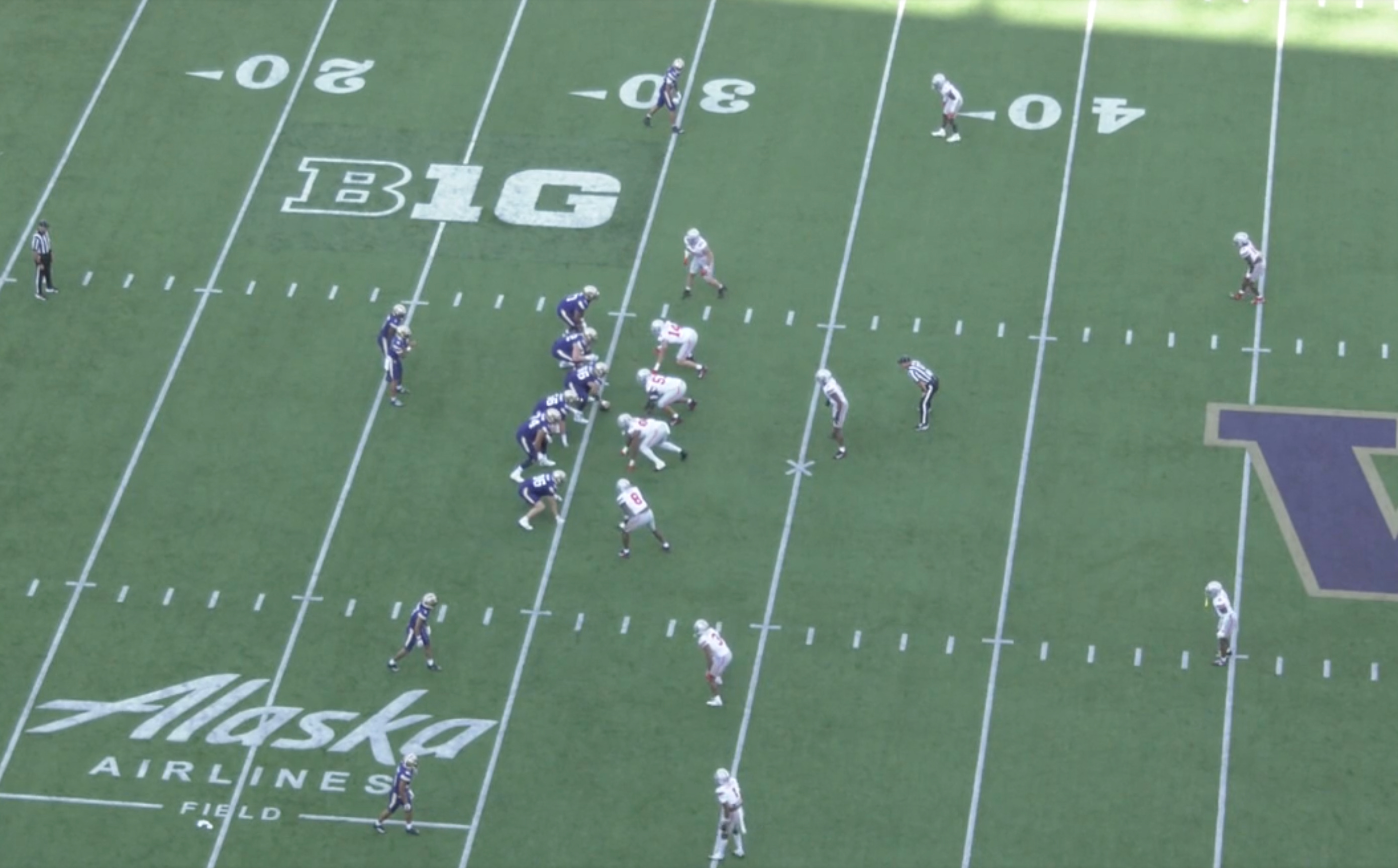
Instead of four defenders independently chasing sacks, the rush works together to form a controlled “cage” around the quarterback. Edge defenders maintain outside leverage while interior rushers compress the middle, eliminating escape lanes and forcing the quarterback to stay inside the pocket.
Common coaching points include:
“Rush as one.”
“Don’t run past the quarterback.”
“Collapse the pocket, don’t open it.”
“Rush to the level of the QB.”
The objective is not necessarily immediate sacks (as frustrating as that may be for Buckeye Nation). The goal is coordinated pressure that prevents second-reaction plays and explosive scrambles.
As offenses increasingly feature quarterbacks capable of extending plays outside the pocket, the cage rush has become a major part of modern defensive football.
Why Coverage Matters in the Cage Philosophy
The rush and coverage must work together.
A disciplined rush means very little if defenders in coverage lose vision on the quarterback once the play breaks down. That is why many defenses pair cage-rush concepts with zone-oriented structures that allow defenders to keep their eyes forward and rally to quarterback movement.
The Evolution of Tampa 2
Traditional Tampa 2 was built around:
two deep safeties
squat corners
a middle linebacker carrying the deep middle
zone defenders keeping vision on the quarterback
The structure was designed to eliminate explosive vertical throws while forcing offenses to operate underneath.
But as spread offenses evolved, defenses had to adapt.
Mobile quarterbacks, RPO systems, and modern spacing concepts stressed traditional Tampa structures. Defenses responded by creating what many coaches now view as non-traditional Tampa concepts — modernized versions of Tampa principles that incorporate disguise, matching, and simulated pressure.
The philosophy stayed the same:
Keep vision on the quarterback, eliminate explosives, and force patient execution.
The structure simply evolved.
LATEST PODCASTS:
LATEST ARTICLES:
LATEST FILM ROOM:

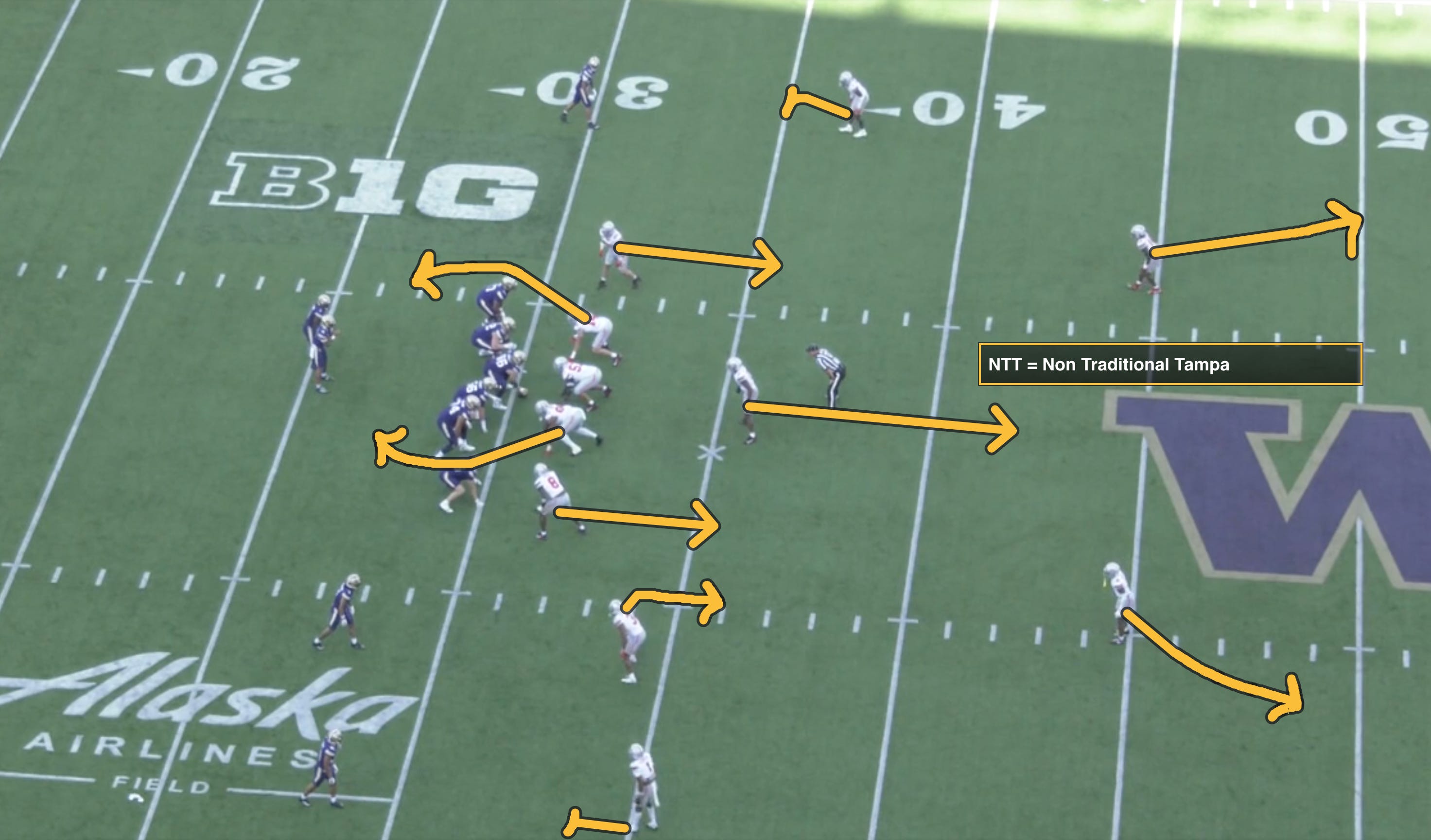
What Non-Traditional Tampa Looks Like
Modern defenses rarely line up in static Tampa 2 snap after snap. Instead, they disguise coverage and rotate into Tampa principles post-snap.
Defenses may:
show quarters pre-snap
rotate safeties late
pattern-match routes underneath
use simulated pressure
drop edges while rushing linebackers
alter who carries the middle of the field
Some teams even use safeties or dime defenders as the deep middle runner instead of the traditional Mike linebacker.
The result is a coverage structure that still carries Tampa DNA while fitting the realities of modern offenses.
Why the Combination Works
The cage rush and non-traditional Tampa complement each other naturally.
The cage rush:
keeps the quarterback contained
compresses escape lanes
forces hesitation
The coverage:
keeps defenders’ eyes on the quarterback
rallies quickly to scrambles
eliminates easy explosives once plays extend
Together, they force quarterbacks into uncomfortable situations:
longer processing
tighter throwing windows
fewer clean escape opportunities
sustained drives instead of explosive plays
Against elite dual-threat quarterbacks, that is often the priority.
Coach Patricia and the Modern Defensive Philosophy
Matt Patricia is not specifically known as a “cage rush” coach, but many of the principles associated with his defenses align closely with this philosophy.
During his time with the New England Patriots, Patricia’s defenses consistently emphasized:
rush lane integrity
leverage
disguised coverage structures
simulated pressure
forcing quarterbacks to operate from the pocket
strategic use of a spy defender against mobile quarterbacks (Arvell in the clip below)
Rather than relying purely on aggressive pressure, Patricia frequently deployed controlled four-man rushes paired with layered zone structures behind them. The objective was often to eliminate off-schedule plays while forcing quarterbacks to process post-snap movement and tight underneath spacing.
The use of a spy became another layer within that structure. While the cage rush compressed escape lanes and the coverage forced hesitation, the spy acted as the final answer once the quarterback attempted to break contain. Instead of chasing chaos defensively, the Patriots often built their plan around controlled spacing, disciplined eyes, and forcing quarterbacks to earn every yard methodically.
That overlap is why many modern defensive staffs no longer think of pass rush and coverage as separate concepts. Instead, they are coordinated together into one complete defensive structure.
And when you combine:
disciplined cage-rush principles
non-traditional Tampa structures
simulated pressure
spy defenders
layered coverage disguises
…with elite athleticism on defense, the result is what modern defenses are chasing today:
a unit capable of eliminating explosive plays while still playing fast, violent, and aggressive within structure.
Hope you enjoyed this weeks, Anatomy of a Play!
Buckeye Film Breakdown will return soon with some fresh content.
